Welcome to CCART — an open, scientific framework for physical climate risk intelligence.
Across India and globally, organisations are struggling to understand how climate change will affect their assets, supply chains, and long‑term resilience. Most climate‑risk reports remain qualitative, scenario‑narrative documents that describe risks but do not quantify them. Yet physical climate risks — cyclones, floods, and extreme heat — are intensifying, and decision‑makers increasingly need transparent, data‑driven, reproducible climate‑risk analytics.
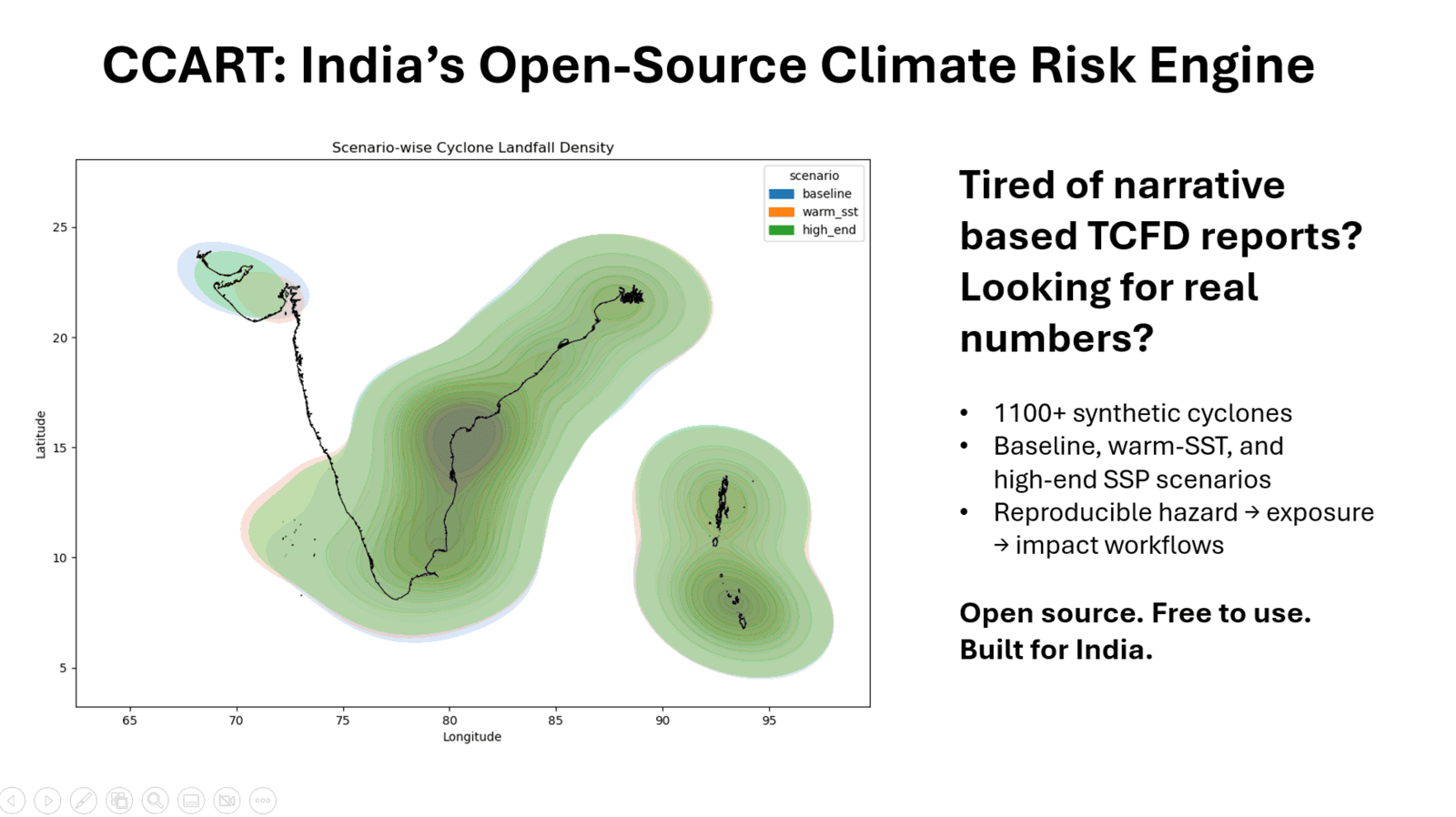
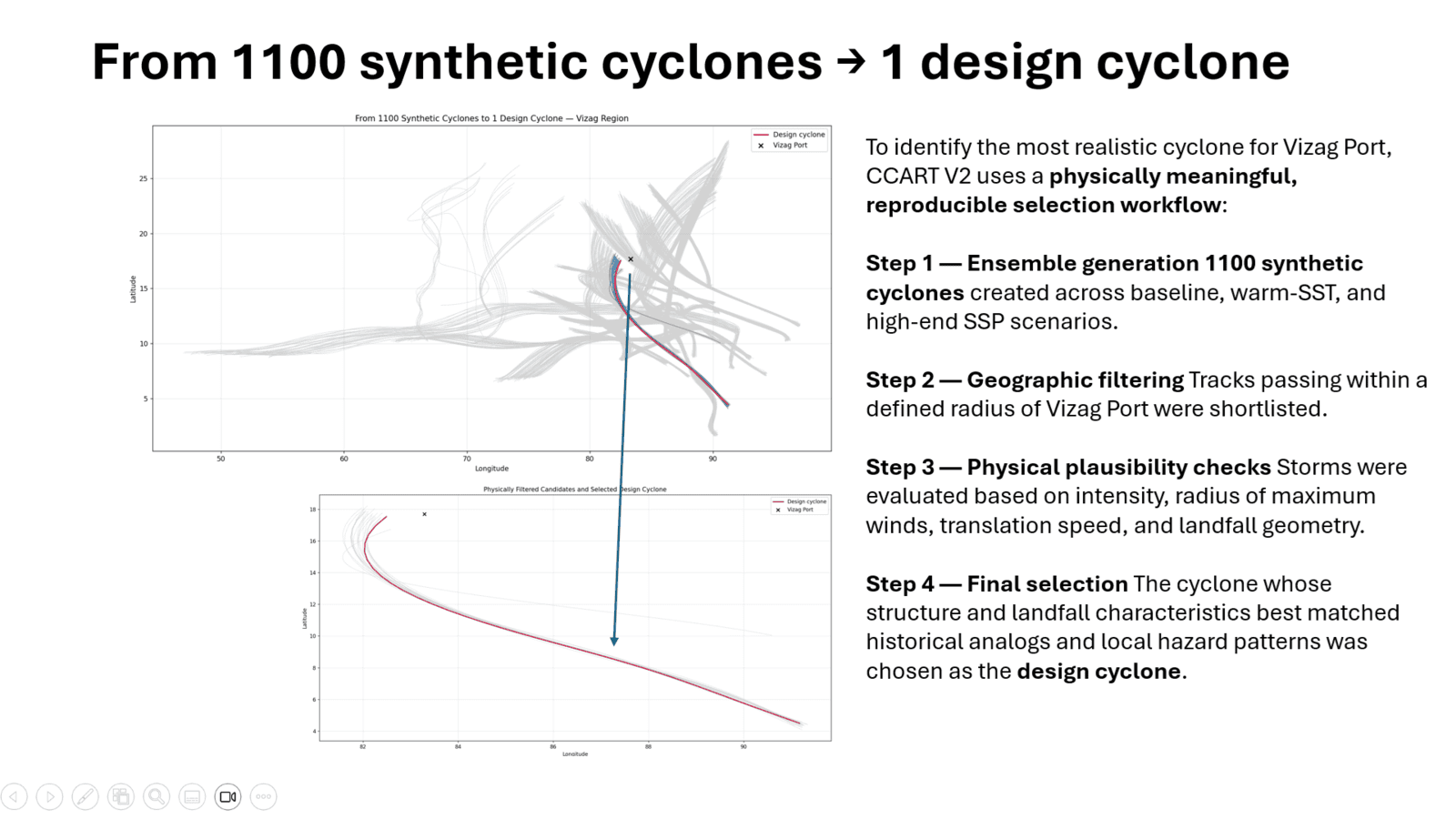
CCART fills this gap by providing an open‑source, physically modelled climate‑risk framework for India. We use hazard‑based climate modelling — not AI‑generated narratives — to estimate district‑level and asset‑level impacts under multiple climate scenarios. Our cyclone module already includes more than 1100 physically plausible synthetic storms across baseline, warm‑SST, and high‑end SSP pathways, enabling robust impact estimation for India’s cyclone‑prone regions.
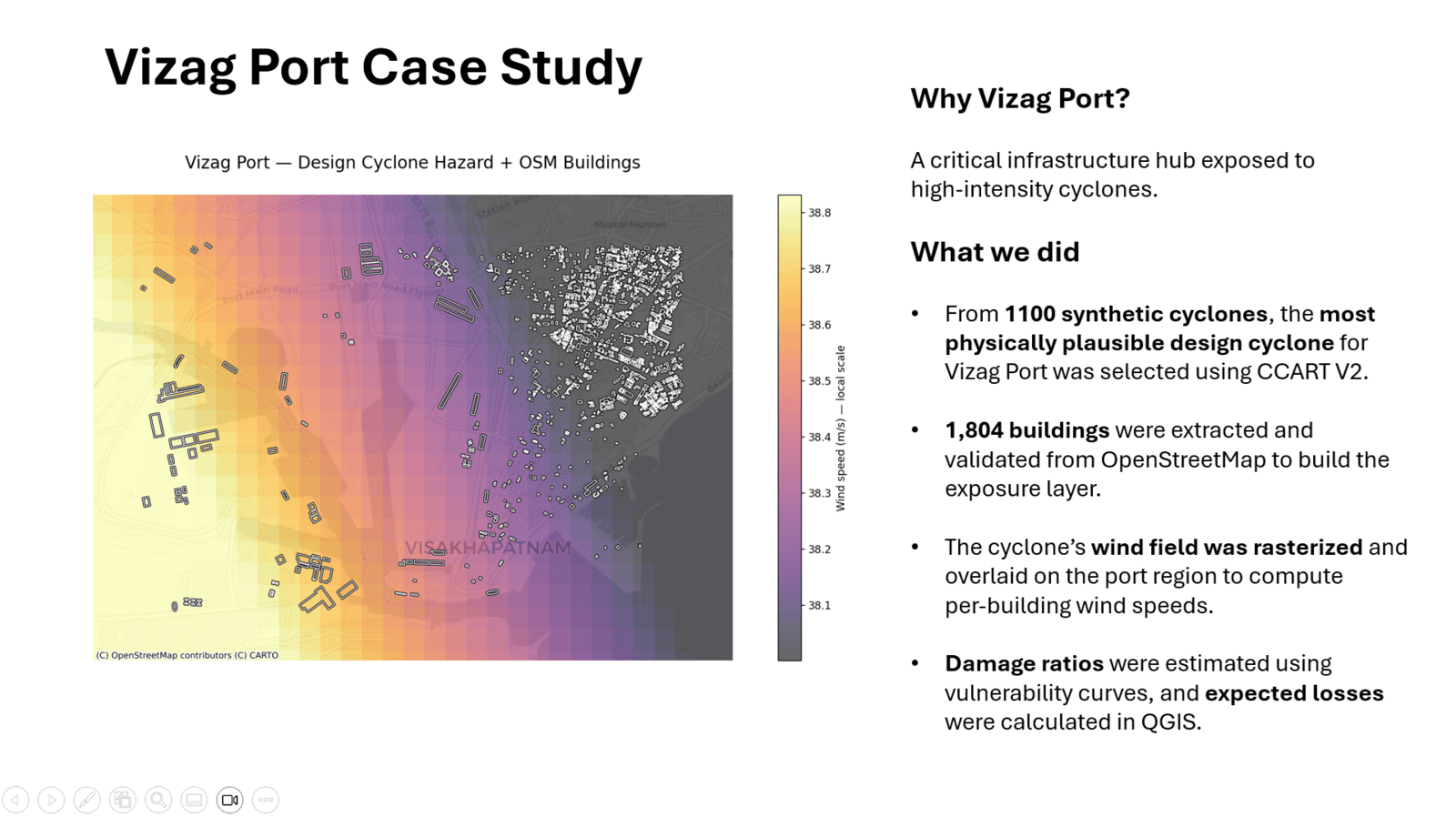
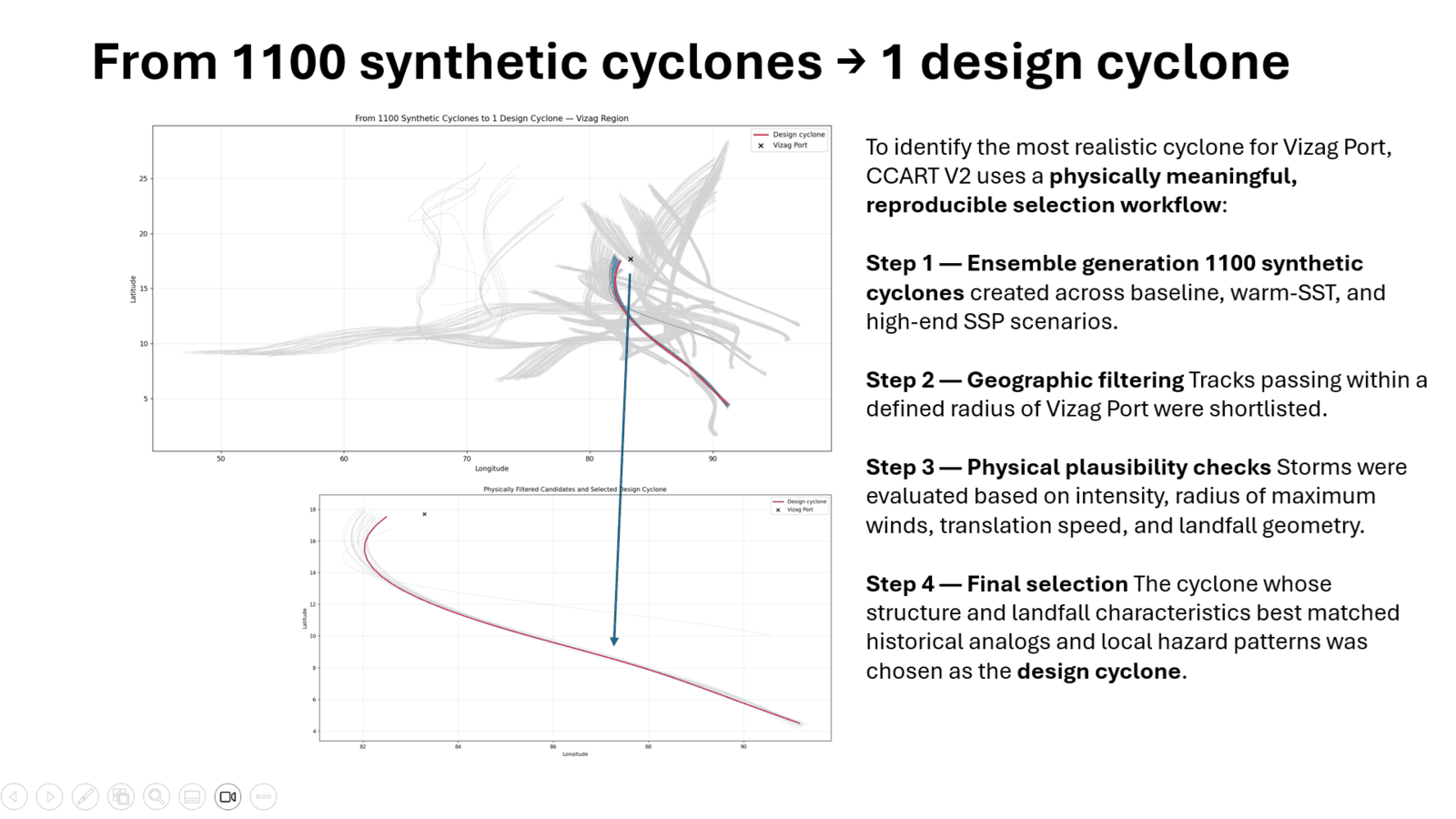
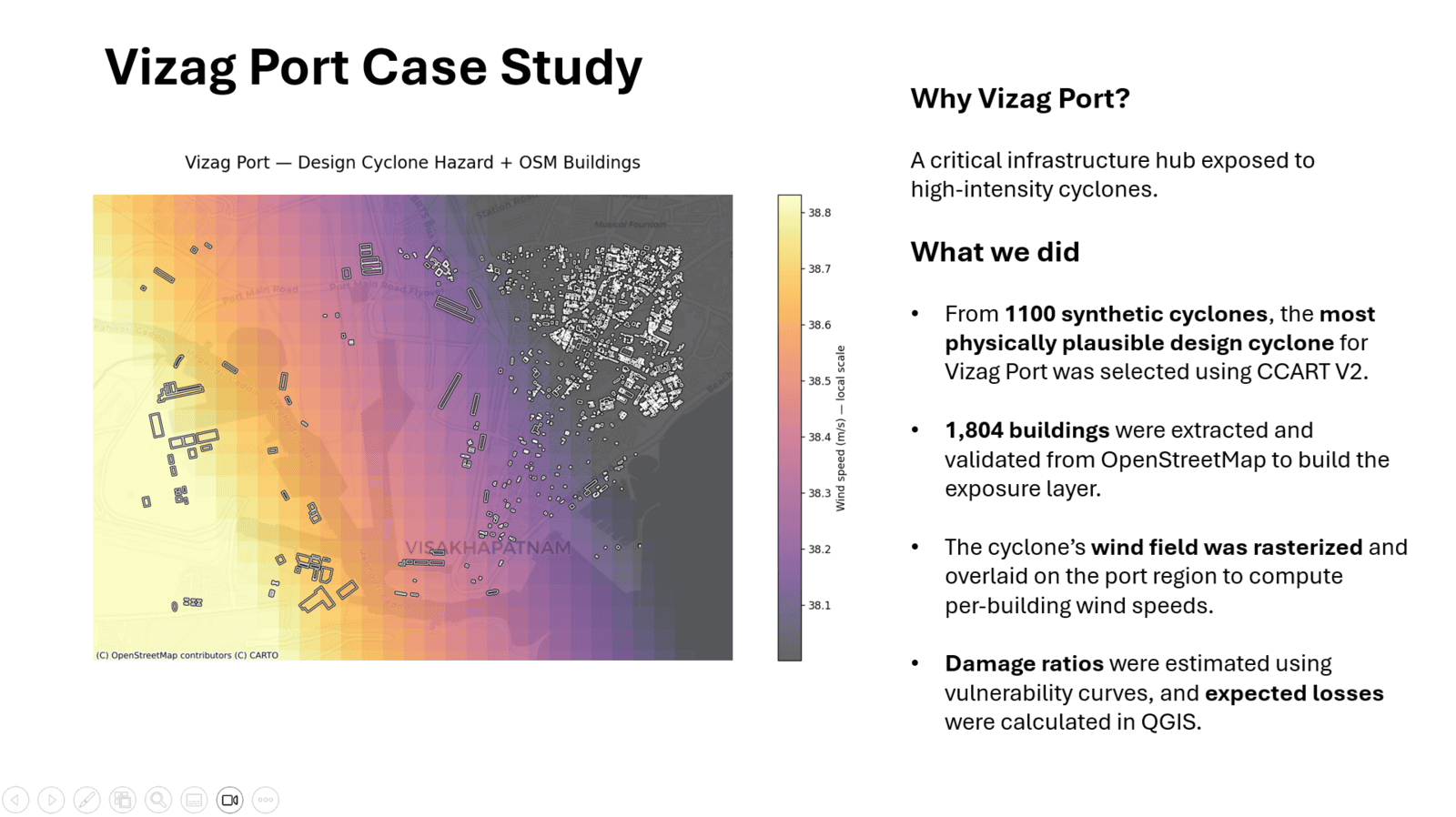
If you have specific locations or assets, CCART can identify high‑impact synthetic cyclones passing near those coordinates and estimate potential future losses using transparent, scientifically grounded methods. We create CMIP scenario-based flood susceptibility index wherever gauge database is available (like INDOFLOODS).
We are actively extending CCART to include extreme heat, creating a multi‑hazard climate‑risk engine for India that is fully open, reproducible, and ready for scientific collaboration.
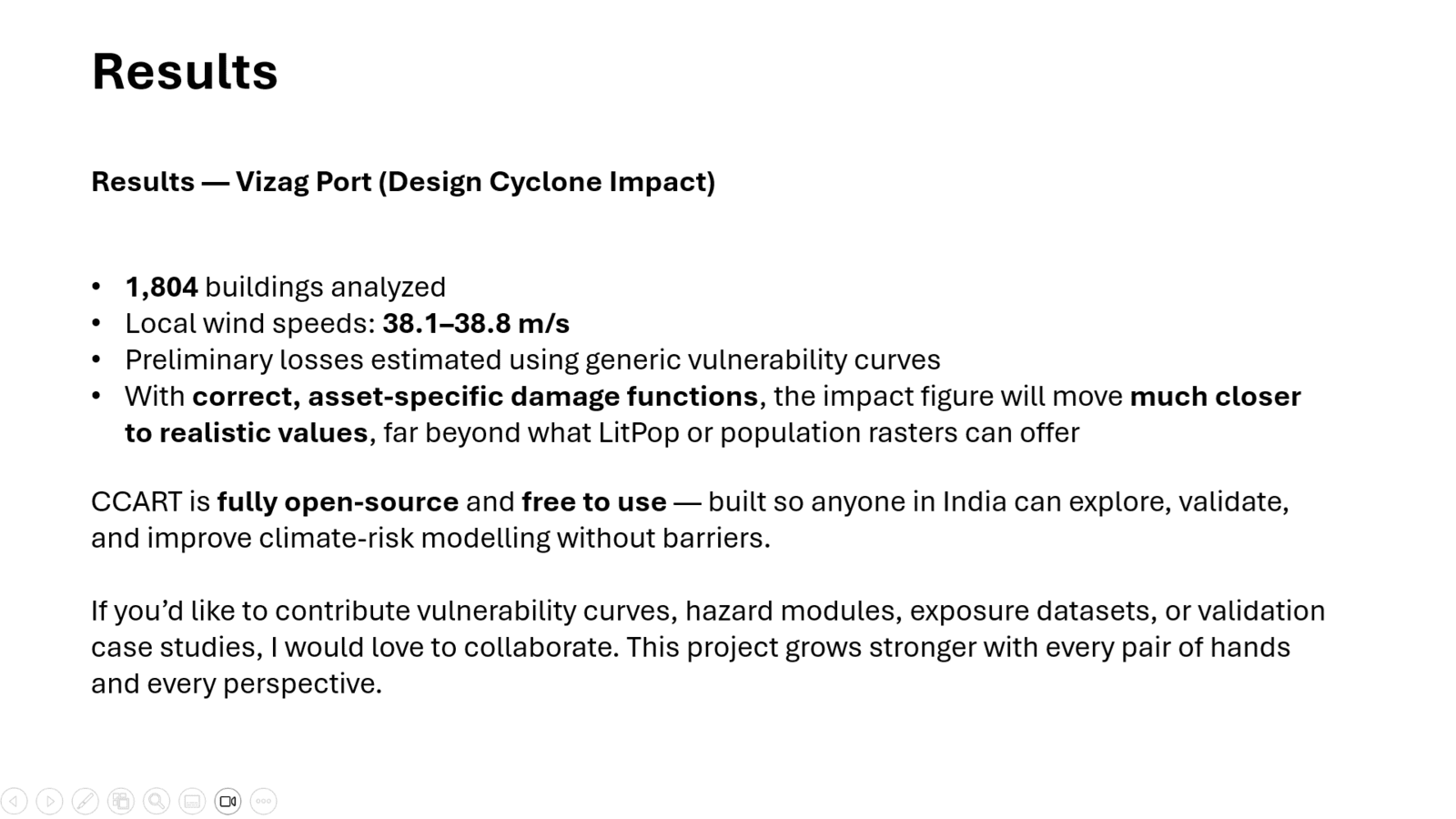
CCART is completely open‑source and free to use. Our GitHub repository provides the full modelling workflow — hazard generation, exposure modelling, vulnerability curves, calibration logic, and district‑level impact estimation — built on top of the open‑source platforms like CLIMADA, extended with India‑specific hazard engines.
Our mission is simple: To build India’s first open, reproducible, multi‑hazard framework for physical climate risk intelligence — enabling researchers, hydrologists, institutions, and practitioners to build, validate, and extend climate‑risk analytics together.